

Table of Contents
Commercial EV Charger Installation: The Comprehensive Enterprise Engineering, Execution
Commercial electric vehicle charger installation has transitioned from a promotional corporate sustainability initiative into a core facility requirement and revenue driver. Commercial real estate executives, retail center operators, multi-family housing developers, and logistics fleet managers face accelerating zero-emission vehicle (ZEV) adoption, updated building codes, and rising customer demand for charging access.
Installing commercial EV charging equipment involves balancing electrical capacity, civil engineering, open-protocol network software, utility interconnection, and capital efficiency. Whether your goal is to monetize commercial parking bays, electrify a delivery fleet, or meet building sustainability standards, executing a commercial EV charger installation requires a structured deployment roadmap.
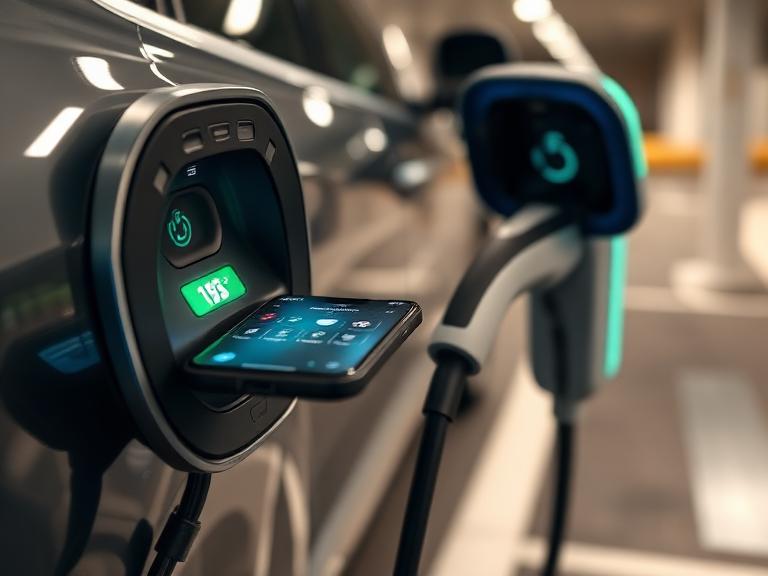
Technical Hardware Matrix & Charging Architecture
Selecting the proper hardware classification forms the foundation of a successful commercial EV charger installation. Electrical engineers must match physical charger capabilities to property dwell times and available facility power.
| Engineering Parameter | Commercial Level 2 (Standard) | Commercial Level 2 (High-Power) | DC Fast Charger (DCFC – Mid) | Ultra-Fast / Megawatt DCFC |
| Input Power Source | 208V / 240V Single-Phase | 208V / 480V 3-Phase | 480V 3-Phase | 480V – 800V 3-Phase |
| Power Output Range | 7.2 kW – 11.5 kW | 19.2 kW – 22.0 kW | 50 kW – 180 kW | 240 kW – 400 kW+ |
| Current Draw (Amps) | 30A – 48A Dedicated | 80A Dedicated | 80A – 250A Continuous | 350A – 500A+ Continuous |
| Miles Range Added / Hr | 25 – 35 Miles | 60 – 80 Miles | 150 – 400 Miles | 600+ Miles (10-80% in 15m) |
| Primary Plug Types | SAE J1772, NACS (J3400) | SAE J1772, NACS (J3400) | CCS Combo 1/2, NACS | CCS2, NACS, MCS (Megawatt) |
| Turnkey Unit Cost Range | $1,500 – $4,500 / port | $3,500 – $6,500 / port | $28,000 – $65,000 / unit | $85,000 – $180,000+ / unit |
| Ideal Property Type | Workplace, Multi-Family | Commercial Fleet, Transit | Retail Centers, QSR, Depots | Highway Hubs, Heavy Freight |
Step-by-Step Commercial EV Charger Installation Roadmap
Executing a commercial EV charger installation involves five key stages to ensure compliance with national electrical safety codes, local building permits, and utility capacity constraints.
1.1. Facility Load Calculation & Site Feasibility:Weeks 1 – 3.
An EVITP-certified electrical contractor performs an initial load calculation using updated NEC guidelines (NEC Article 120 / Section 625). Assess main panel headroom, utility transformer kVA limits, and determine if service upgrades or a separate utility meter are required.
2.2. Hardware Procurement & Open-Protocol Software Selection:Weeks 3 – 5.
Select hardware certified under UL 2594 / UL 2202 standards. Partner with a cloud Charge Point Management System (CPMS) that supports OCPP 1.6-J or OCPP 2.0.1 to enable dynamic load balancing, automated driver billing, and remote diagnostic management.
3.3. Engineering Designs, Permitting & Incentive Filing:Weeks 5 – 9.
Draft stamped single-line electrical diagrams (SLDs) and civil site plans. Submit permit applications to local building departments and apply for utility make-ready rebates and federal tax credits (e.g., Alternative Fuel Vehicle Refueling Property Credit).
4.4. Civil Construction, Conduit Trenching & Electrical Wiring:Weeks 9 – 13.
Perform asphalt saw-cutting, trenching, directional boring, and concrete pad pouring. Run heavy-duty THHN/THWN-2 copper conductors in rigid metal conduits (RMC) or PVC, install protective bollards, mount pedestals, and establish internet connectivity (Cellular 4G/5G or hardwired Ethernet).
5.5. System Commissioning, Network Sync & Launch:Weeks 13 – 15.
Perform ground-fault circuit interrupter (GFCI) testing and initial powering. Connect chargers to the back-end CPMS software via cellular SIMs, configure driver pricing structures, test credit card reader gateways, and establish 24/7 driver support access.
National Electrical Code (NEC) Compliance Guidelines
Under the NEC standards, commercial EV charger installations require strict adherence to updated electrical safety mandates:
- Qualified Installer Mandate (NEC 625.4): Hardwired Level 2 and DC Fast Chargers must be installed by qualified personnel. Industrial standard practice requires technicians certified through the Electric Vehicle Infrastructure Training Program (EVITP).
- Updated GFCI Requirements (NEC 210.8): Commercial EV charging circuits require 5mA Class A Ground-Fault Circuit Interrupter (GFCI) protection, providing enhanced ground-fault safety.
- Power Control Systems (PCS / NEC 625.42 & Article 750): When site electrical headroom is constrained, engineers can deploy UL-listed Power Control Systems. These systems dynamically adjust charger output to match panel capacity, avoiding expensive utility service upgrades.
- Dedicated EV Receptacles (NEC 625.44): Standard residential NEMA outlets are prohibited for commercial EV power transfer; commercial plug-in setups require heavy-duty receptacles specifically rated for continuous EVSE loads.
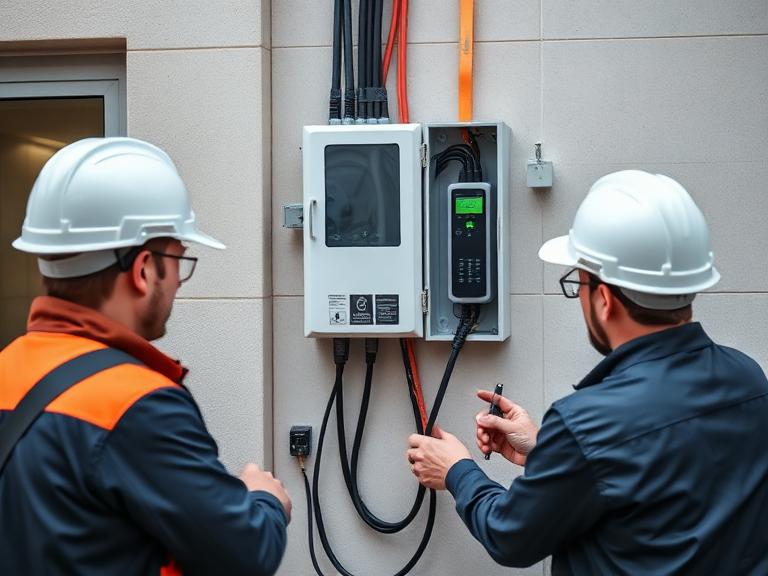
Financial Analysis: CapEx, OpEx, and ROI Modeling
A successful commercial EV charger installation project requires balancing capital expenses (CapEx) against operational fees (OpEx) to achieve a positive return on investment (ROI).
Capital Expenditure (CapEx) Distribution
- Hardware & Pedestals: 35% – 45% of budget.
- Electrical Infrastructure (Breakers, Wire, Transformers): 25% – 35% of budget.
- Civil Works (Trenching, Asphalt Patching, Concrete Pads, Signage): 15% – 20% of budget.
- Soft Costs (Permits, Engineering Single-Lines, Utility Interconnection Fees): 8% – 12% of budget.
Enterprise 10-Port Level 2 ROI Financial Model
Total Capital Expenditure (CapEx - 5 Dual-Port Level 2 Units):   $45,000
Minus Utility Make-Ready Rebates & Tax Incentives (40% Avg):      -$18,000
-------------------------------------------------------------------------
Net Initial Outlay:                                               $27,000

Operating Metrics & Revenue Projections:
• Average Port Utilization: 5.0 Hours / Day per Port
• Daily Energy Delivered: ~180 kWh Total Across Site
• Electricity Supply Cost: $0.13 / kWh
• Driver Billed Tariff Rate: $0.35 / kWh
• Net Margin per kWh Billed: $0.22 / kWh

Annual Financial Summary:
• Gross Annual Energy Revenue:                                    $22,995
• Annual Operating Costs (Network CPMS, Maintenance, Cellular):    -$3,200
• Net Annual Operating Income (NOI):                                $19,795

Estimated Payback Period: ~16.3 Months
Projected 5-Year Net Present Value (NPV @ 8% Discount): $61,420
Q1: How much does a turnkey commercial EV charger installation cost?
Answer: The turnkey cost for a commercial Level 2 installation typically ranges from $3,000 to $7,500 per port. For high-power DC Fast Chargers (DCFC), turnkey installation ranges from $35,000 to $120,000+ per port, depending on trenching distances, panel upgrades, and utility transformer sizing.
Q2: What are the main electrical requirements for a commercial EV charger installation?
Answer: Commercial Level 2 units require dedicated 208V/240V single-phase or 208V three-phase circuits rated from 40A to 80A continuous load. DC Fast Chargers require a 480V 3-phase connection. An electrical contractor must perform load calculations to verify if your panel has headroom or requires a service upgrade.
Q3: Why is EVITP certification necessary for commercial EV installation contractors?
Answer: The Electric Vehicle Infrastructure Training Program (EVITP) provides specialized training for licensed electricians. Certified installers ensure compliance with national safety codes (such as NEC 625), correct cable sizing, proper grounding, and local utility interconnection guidelines.
Q4: How do I avoid expensive utility service upgrades during installation?
Answer: You can avoid full service upgrades by deploying Power Control Systems (PCS) or dynamic load management software (OCPP). These systems automatically adjust charging power output based on real-time building electrical demand, keeping peak load within existing panel limits.
Q5: How long does a commercial EV charger installation project take?
Answer: A standard Level 2 workplace or commercial installation takes 8 to 12 weeks from initial site audit to activation. Complex DC Fast Charger installations involving heavy civil trenching, municipal permitting, and utility transformer upgrades can take 16 to 36 weeks.
Q6: What is the difference between hardwired and plug-in commercial EV chargers?
Answer: Hardwired installations connect electrical conductors directly into the charging station’s terminal block, providing higher durability, weather resistance, and compliance with updated commercial codes. Plug-in systems use NEMA receptacles, which are generally restricted to light commercial or residential settings and require additional external Class A GFCI breakers.
Q7: What permits are required for commercial EV charger installation?
Answer: Most municipalities require electrical permits, building permits, and zoning/site design approvals. If construction encroaches on public rights-of-way or requires major utility upgrades, additional environmental, local traffic safety, and utility interconnection permits are required.
Q8: How far can EV charger parking bays be located from the main electrical room?
Answer: While chargers can be placed hundreds of feet away, longer conduit runs increase voltage drop and installation costs. To maintain voltage drop below the recommended 3% limit, installers must use thicker, higher-gauge copper conductors, which increases material expenses. Keeping chargers closer to the main electrical room minimizes civil trenching and wiring costs.
Q9: What is OCPP, and why is it mandatory for commercial charger software?
Answer: Open Charge Point Protocol (OCPP) is an open communication standard linking charger hardware to management networks. Using OCPP-compliant equipment prevents vendor lock-in, allowing site owners to switch network management providers without replacing physical chargers.
Q10: How can property owners monetize commercial EV charging stations?
Answer: Owners can monetize charging stations using cloud CPMS software to set billing rules:
- Per-kWh Rates: Billed directly for electricity consumed.
- Session Fees: Flat access fees per plug-in event.
- Parking Duration Fees: Hourly pricing to encourage driver turnover.
- Custom Access Tiers: Free charging for employees or key customers, with paid charging for external drivers.
Q11: What financial incentives are available to offset installation costs?
Answer: In the United States, commercial projects may qualify for the Section 30C Alternative Fuel Infrastructure Tax Credit (up to 30% of cost in eligible tracts), state air quality grants, and utility “make-ready” programs that cover up to 100% of electrical infrastructure upgrade costs.
Q12: How do commercial EV chargers handle extreme outdoor weather?
Answer: Commercial stations feature weatherproof enclosures rated NEMA 3R, NEMA 4X, or IP65/IP66, ensuring safe operation during rain, snow, and extreme heat. High-power DC Fast Chargers also use liquid-cooled cables to maintain optimal operating temperatures during high-current charging sessions.
Q13: What Americans with Disabilities Act (ADA) requirements apply to EV charging bays?
Answer: ADA guidelines require accessibility features for commercial EV charging stalls, including clear floor space (30″ x 48″), accessible routes, maximum operable hardware reach heights (below 48 inches), and manageable cable weight/retractor tension for disabled drivers.
Q14: What is the average maintenance requirement for commercial EV charging stations?
Answer: Regular maintenance involves monthly visual inspections of cables and connectors, cleaning cooling fan filters on DC chargers, testing ground-fault protection systems, and updating firmware over-the-air (OTA). SLA contracts with turnkey operators help maintain 98%+ station uptime.
Q15: How many commercial chargers should a facility install initially?
Answer: A baseline for corporate offices and commercial real estate is electrifying 5% to 10% of total parking spaces. Installing extra underground conduit during initial trenching allows you to expand capacity to 20%+ as EV adoption grows without needing to trench again later.
Strategic Conclusion
Commercial EV charger installation is a foundational infrastructure investment that transforms passive parking spaces into modern, grid-connected assets. By following updated national electrical codes, selecting open-protocol (OCPP) hardware, and utilizing dynamic energy management software, commercial real estate developers, workplace executives, and fleet managers can deploy scalable charging networks that optimize capital expenditure, generate new revenue, and support the shift to zero-emission mobility.