

Table of Contents
Commercial EV Charging Stations: Ultimate Business Guide
The rapid acceleration of the global electric mobility transition has fundamentally transformed vehicle refueling infrastructure. As highway networks expand, urban centers densify, and corporate logistics rapidly decarbonize, the demand for public charging systems has transitioned from a future-looking real estate amenity into a core utility sector. For businesses, property developers, fleet operators, and infrastructure investors, the deployment of commercial EV charging stations represents a high-yield asset class with compounding long-term value.
However, developing a commercial charging facility is vastly different from installing standard residential hardware. Commercial setups require heavy infrastructure upgrades, rigorous compliance with state distribution utility policies, integration of complex network management software, and high-capacity safety switchgear.
This comprehensive technical blueprint analyzes the architecture, deployment framework, financial modeling, and engineering parameters necessary to build scalable, high-utilization commercial EV charging hubs.
1. Classifying Commercial EV Charging Architecture
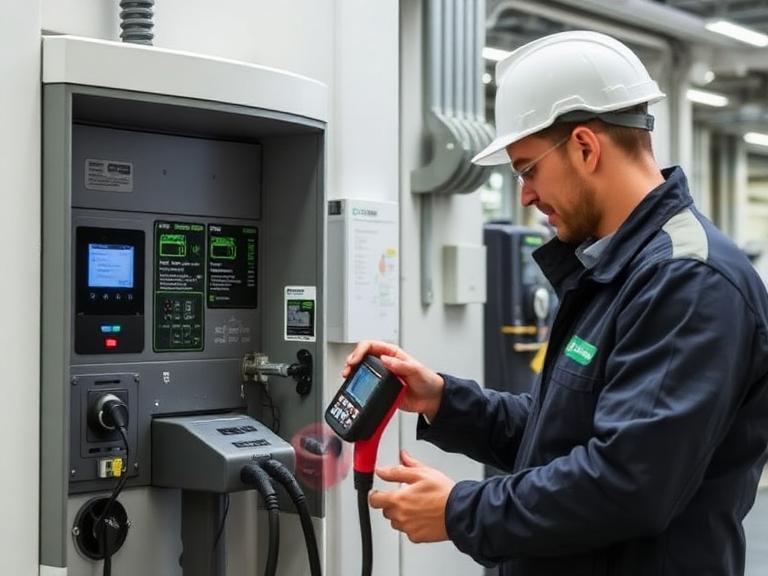
Commercial charging facilities are divided into distinct categories based on current types, voltage levels, operational settings, and target vehicle segments.
Destination AC Commercial Charging (7.4 kW – 22 kW)
Destination setups supply Alternating Current (AC) directly to the vehicle’s onboard converter. These units are optimized for locations where dwell times exceed two hours, such as corporate tech parks, shopping malls, multi-family residential complexes, and airport long-term parking bays.
- Engineering Standard: Typically utilizes three-phase 415V input configurations to output 11 kW or 22 kW per individual charging bay.
- Value Profile: Lower hardware capital expenditure (CAPEX) allows developers to install multiple charging bays across large parking areas, optimizing infrastructure coverage.
High-Output DC Fast Charging (30 kW – 360 kW+)
Direct Current (DC) fast-charging infrastructure bypasses the vehicle’s internal onboard conversion limitations, feeding high-voltage current straight to the lithium-ion battery management system (BMS). These stations are critical for highway waystations, interstate transit corridors, delivery fleet hubs, and inner-city quick-turnaround depots.
- Engineering Standard: Scaled from standard 30 kW/60 kW modular units up to 150 kW and ultra-fast 360 kW liquid-cooled dispensing architecture.
- Value Profile: Higher upfront CAPEX balanced by accelerated vehicle turnaround times, maximizing throughput and daily monetization.
2. Technical Blueprinting & Electrical Grid Integration
The primary bottleneck in launching commercial EV charging facilities is the local electrical distribution system. Operating a network of high-capacity DC fast chargers requires heavy-duty utility planning and electrical engineering.
Grid Load Calculation and Transformer Sizing
A multi-bay DC fast-charging plaza cannot operate on standard commercial service drops. A site planned for four 60 kW DC dual-gun chargers requires a total capacity of:
$$\text{Total Load Requirement} = 4 \times 60\text{ kW} = 240\text{ kW}$$
Applying an engineering safety factor of 1.25 to account for continuous thermal load performance, system inefficiencies, and auxiliary equipment (lighting, cooling, telemetry):
$$\text{Required Service Capacity} = 240\text{ kW} \times 1.25 = 300\text{ kW}$$
For deployments of this scale, developers must establish a dedicated High-Tension (HT) sub-station connection directly with the regional electricity distribution company (DISCOM). This process involves installing a dedicated step-down transformer (typically converting 11kV or 33kV grid lines down to 415V three-phase industrial output) alongside heavy-duty ring main units (RMU).
Power Quality, Harmonics, and Mitigation
The large-scale switching electronics within high-capacity DC charging rectifiers can introduce non-linear current distortions, known as Total Harmonic Distortion (THD), into the local power grid. High THD can overheat utility transformers, destabilize nearby precision electronics, and cause voltage drops.
- Compliance Requirement: Commercial installations must incorporate active or passive harmonic filters to restrict current THD beneath standard regulatory thresholds (typically below 5% in accordance with IEEE 519 standards).
- Power Factor Calibration: The integrated power supply components must maintain a power factor close to unity ($\ge 0.99$) under peak operational loads to avoid reactive power penalty surcharges from utility companies.
3. Commercial Electrical Safety Systems & Structural Compliance
Commercial EVSE platforms handle extreme energy flows continuously, making strict safety design non-negotiable. The system configuration must isolate electrical faults immediately to protect the user, the vehicle, and the surrounding property.
| Safety Sub-System | Engineering Specification | Primary Protective Function |
| Overcurrent Protection (ACB/MCCB) | Molded Case Circuit Breakers (MCCB) equipped with adjustable electronic trip units. | Prevents system component failure from severe electrical overloads and short circuits. |
| Residual Current Protection | Type-B Residual Current Devices (RCD) capable of sensing high-frequency AC and smooth DC ground leakage. | Instantly isolates the power flow if minor current deviations or insulation breakdowns are detected. |
| Surge Mitigation Systems | Type-1 and Type-2 Surge Protection Devices (SPD) wired into incoming distribution paths. | Diverts sudden high-voltage transient spikes from lightning or grid switching safely away from sensitive components. |
| Isolation Monitoring | Integrated Continuous Insulation Monitoring Devices (IMD) operating within the DC path. | Assesses insulation resistance before and during charging; disables power delivery if system structural isolation degrades. |
| Industrial Earthing Network | Multi-point copper matrix or dual chemical grounding wells maintaining loop resistance below 1 Ohm. | Provides a low-resistance path to clear faults safely, ensuring absolute grounding stability. |
Emergency Stop and Environmental Architecture
Every commercial dispenser cluster must include a highly visible, physical Emergency Stop (E-Stop) mushroom button that instantly cuts power via an industrial shunt-trip mechanism at the main breaker panel.
Furthermore, all outdoor commercial hardware must feature minimum IP54 (Ingress Protection) dust and water resistance ratings, alongside impact protection ratings of IK10 to shield the internal power electronics from extreme weather, vandalism, and accidental vehicle impacts.
4. Operational Software: OCPP, OCPI, and CPMS Infrastructure
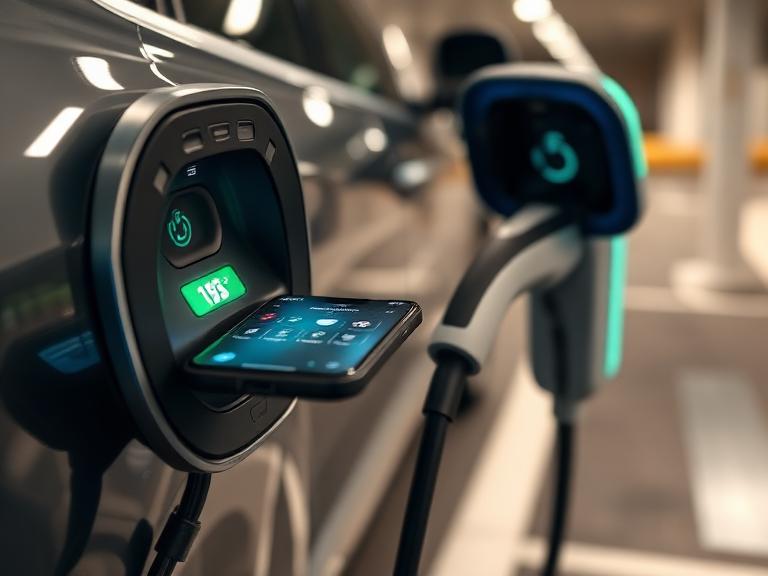
The profitability of commercial charging infrastructure relies heavily on its operational software. Without software integration, managing dynamic pricing, tracking energy consumption, and ensuring stable customer access is impossible.
Open Charge Point Protocol (OCPP 1.6J / 2.0.1)
Commercial charge points connect to a centralized cloud back-end via the Open Charge Point Protocol (OCPP). This standardizes communication between hardware and software, preventing vendor lock-in and allowing operators to switch software platforms without changing their physical chargers.
- Real-Time Data Streams: OCPP enables live diagnostic telemetry, automated error notifications, remote hardware resets, and over-the-air (OTA) tariff profile configuration.
- Smart Charge Profile Management: Facilitates automated smart charging schemes, allowing central software platforms to adjust power limits dynamically based on time-of-day utility pricing or site-specific grid constraints.
Open Charge Point Interface (OCPI) & Network e-Roaming
To maximize utilization, operators integrate the Open Charge Point Interface (OCPI) protocol. OCPI enables interoperable e-roaming, allowing third-party mapping apps, vehicle manufacturers, and corporate fleet platforms to view live station availability, initiate charging, and handle payments seamlessly across different charging networks. This eliminates the fragmentation of requiring distinct mobile apps for every network, driving higher customer volume to the station.
5. Deployment Framework: Site Selection and Construction Roadmap
Building an optimized commercial station requires a strategic, phased deployment framework.
1.Siting Analysis and Traffic Utilization Modeling:Phase 1.
Utilize geographic information systems (GIS) data to analyze traffic flows, nearby commercial hubs, highway exit volumes, and competitive site density. Prioritize locations near established amenities (restaurants, restrooms, retail centers) to provide convenient options for drivers during charging down-time.
2.Feasibility Engineering and Grid Capacity Validation:Phase 2.
Submit site electrical load assessment profiles to the local utility provider. Conduct on-site engineering surveys to locate utility distribution lines, evaluate sub-station proximity, and calculate required step-down transformer capacities.
3.Regulatory Approvals, Leasing, and Permitting:Phase 3.
Secure long-term commercial ground leases or property ease rights. File for municipal construction clearances, environmental safety exemptions, grid interconnection permits, and fire department compliance sign-offs.
4.Civil Engineering and Infrastructure Construction:Phase 4.
Excavate utility trenches, cast reinforced concrete mounting pads for transformers and heavy DC chargers, install safety bollards, and build ADA-compliant parking bays. Lay high-impact PVC or galvanized iron underground structural conduits for power cables.
5.Electrical Integration and EVSE Hardware Assembly:Phase 5.
Mount the HT step-down transformer, set up the main electrical distribution panel with integrated MCCBs, RCDs, and surge components, and pull heavy-gauge armored copper cabling. Bolt the commercial charging dispensers down and make all input power terminations.
6.Commissioning, Cloud Integration, and Live Launch:Phase 6.
Perform comprehensive loop impedance checks, cold insulation resistance diagnostics, and live electrical load tests. Connect the hardware nodes to the cloud Charge Point Management System (CPMS) via cellular or fiber backhaul, configure payment gateway routers, and run live vehicle tests before opening the facility to the public.
6. Financial Modeling: Expenditures, Revenue Streams, and ROI
Developing commercial charging infrastructure demands a clear financial plan. Operators must balance significant upfront capital outlays against predictable operating costs and multiple revenue streams.
Capital Expenditure (CAPEX) Breakdown
- Hardware Sourcing: A premium dual-gun 60 kW DC Fast Charger ranges between ₹8,00,000 to ₹14,00,000. High-capacity 120 kW to 180 kW modular dispensers range from ₹18,00,000 to ₹35,00,000+.
- Grid Upgrades & Civil Works: Installing a dedicated 250 kVA transformer, HT lines, electrical panel boards, heavy cabling, trenching, concrete pads, and site striping typically requires an additional ₹12,00,000 to ₹25,00,000 depending on the distance to the grid tie-in.
Operating Expenditure (OPEX) Profiles
- Electricity Tariffs: The core ongoing variable cost, driven by commercial utility supply metrics and peak demand charges.
- Network & Maintenance Costs: Cloud CPMS software licenses, cellular data streams, credit card transaction processing fees, security monitoring, and regular preventative maintenance contracts (filter swaps, cable inspections).
Maximizing Monetization Models
To accelerate return on investment (ROI), commercial charging hubs should leverage diversified revenue models:
- Direct Charging Margins: Earning a predictable spread on the difference between the wholesale utility power tariff and the public retail charging price per kWh.
- Time-Based Idle Fees: Charging automated penalties per minute if a vehicle remains plugged in after hitting its targeted charge limit, maximizing station turnover and availability.
- B2B Fleet Partnerships: Contracting guaranteed charging windows or overnight depot access for local e-commerce logistics fleets, corporate employee shuttle services, and ride-hailing networks to ensure stable baseline utilization.
- Digital Out-of-Home (DOOH) Advertising: Utilizing high-brightness LCD screens integrated directly into the dispenser chassis to run localized programmatic advertisements, opening up secondary high-margin revenue streams.
7. Strategic Real Estate and Business Sector Integration
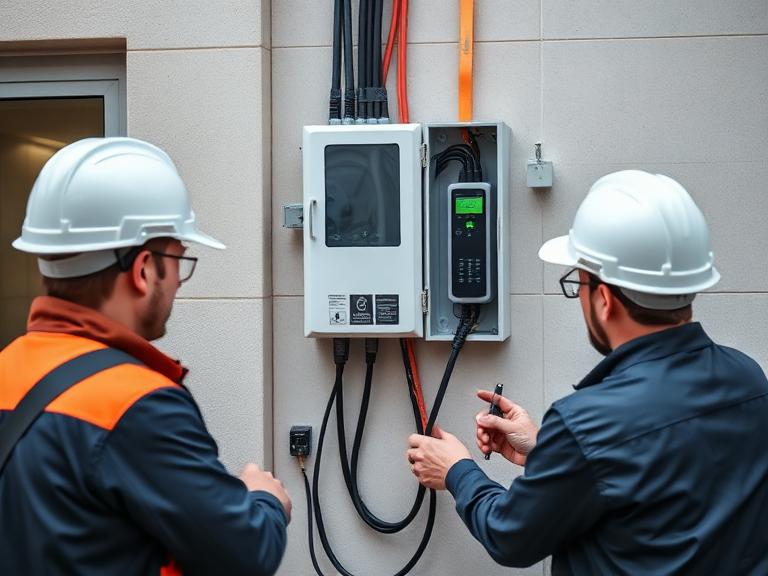
Different commercial sectors can customize their EV charging strategies to align with their unique business models.
Retail Centers, Hospitality, and Malls
For shopping centers and hotels, EV charging serves as an excellent tool for customer acquisition and retention. Studies show that EV drivers actively select destinations based on reliable charger availability, spending significantly more time and money at those venues while their vehicle charges.
- Deployment Model: A balanced mix of 22 kW AC destination chargers for general patrons, paired with a few 60 kW DC fast units for quick-turnaround visitors.
Workplace Corporate Infrastructure
Providing charging options at major workplace environments is a key driver for employee satisfaction and corporate sustainability goals.
- Deployment Model: Dense networks of 7.4 kW to 22 kW AC smart chargers connected to a centralized workplace load management system. This framework uses building load management to prioritize vehicle charging sequentially throughout the day without triggering peak demand surcharges for the corporate facility.
Fleet Management and Last-Mile Logistics Depots
For logistics and final-mile delivery hubs, system reliability and high-speed energy transfer are critical operational requirements.
- Deployment Model: Dedicated high-capacity DC fast-charging systems (120 kW to 240 kW) configured with dual-gun setups to support fast turnaround times for commercial vehicles. These are integrated with fleet scheduling software to coordinate charging sessions automatically with daily delivery routes.
8. Conclusion: Scalable Investment in Clean Infrastructure
Developing commercial EV charging stations represents a strategic opportunity to invest in the future of transport infrastructure. While the initial phases require detailed site planning, structural load negotiations, and significant upfront capital investments, the long-term benefits are substantial. By choosing interoperable hardware, installing robust electrical safety mechanisms, and selecting scalable management software, operators can build highly profitable infrastructure assets that capture value throughout the transition to electric mobility.