

Table of Contents
Complete Guide to EV Charging Point Installation: Costs, Permits, & Setup
The global transition toward electric mobility requires robust, safe, and efficient EV charging infrastructure. The foundation of this transition lies in proper EV charging point installation across residential homes, multi-family complexes, workplaces, commercial parking facilities, and industrial fleet depots.
Installing electric vehicle supply equipment (EVSE) involves more than mounting a device to a wall. It requires careful load calculations, adherence to local and national electrical safety codes, proper permitting, equipment sizing, and precise physical setup.
Understanding electrical capacity, safety compliance, hardware selection, and site engineering ensures that your charging infrastructure remains reliable, scalable, and future-proof.
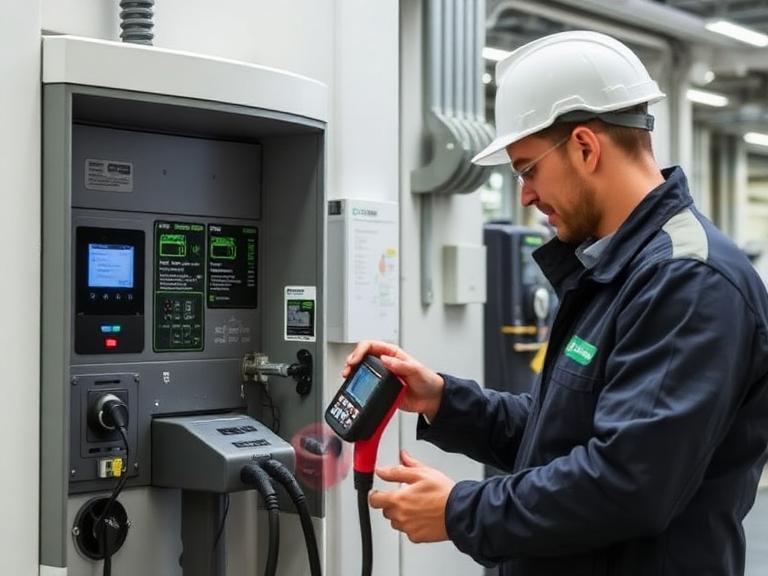
Core Charging Standards & Speed Level Breakdown
Selecting the correct charging equipment requires understanding the three core tiers of electric vehicle charging technology.
       Level 1 (120V AC)             Level 2 (240V AC)          Level 3 DC Fast (480V DC)
   [ 1.3 kW - 2.4 kW Output ]    [ 3.7 kW - 19.2 kW Output ]   [ 50 kW - 350+ kW Output ]
   +-----------------------+     +-----------------------+     +------------------------+
   |  Standard Outlet      |     |  Dedicated Circuit    |     |  Industrial Grid       |
   |  3 - 5 miles/hour     |     |  15 - 60 miles/hour   |     |  100 - 300 miles/15m   |
   +-----------------------+     +-----------------------+     +------------------------+
| Charging Tier | Operating Voltage | Current Range (Amps) | Power Output (kW) | Range Added per Hour | Primary Use Case |
| Level 1 AC | 120V (1-Phase) | 12A – 16A | 1.3 kW – 1.9 kW | 3 – 5 miles | Emergency / Plug-in Hybrids (PHEV) |
| Level 2 AC | 208V – 240V (1-Phase) | 16A – 80A | 3.7 kW – 19.2 kW | 15 – 60 miles | Residential, Commercial & Multi-family |
| Level 3 DC Fast | 480V+ (3-Phase) | Up to 500A | 50 kW – 350+ kW | 100 – 300+ miles (15-30 min) | Public Corridors, Highways, Fleets |
Level 1 Charging Points
Level 1 units connect to standard 120-volt AC household outlets. Because power output is limited to under 2 kW, charging a fully depleted battery electric vehicle (BEV) can take between 24 and 48 hours. Level 1 serves primarily as a temporary backup or for low-mileage Plug-in Hybrid Electric Vehicles (PHEVs).
Level 2 Charging Points
Level 2 represents the global standard for residential, commercial, and workplace installations. Operating at 208V to 240V AC, Level 2 units deliver between 16 and 80 amps, yielding power outputs from 3.7 kW up to 19.2 kW. A typical 48-amp Level 2 charger can fully replenish a mid-size EV overnight in 4 to 8 hours.
Level 3 (DC Fast Charging)
Direct Current Fast Chargers (DCFC) bypass the vehicle’s onboard AC-to-DC converter, supplying high-voltage DC directly to the traction battery pack. Operating at 480V three-phase power or higher, DC fast chargers supply 50 kW to over 350 kW, bringing battery charge state from 10% to 80% in under 20 minutes. These systems require substantial electrical infrastructure, transformer additions, and thermal management systems.
Residential EV Charging Point Installation Step-by-Step
A professional residential installation guarantees safe, continuous power draw without risking electrical fires or panel tripping.
+------------------------------------------------------------------------------------+
|                         RESIDENTIAL INSTALLATION WORKFLOW                          |
+------------------------------------------------------------------------------------+
|                                                                                    |
|  [Phase 1: Assessment] -----> [Phase 2: Permitting] -----> [Phase 3: Cabling]      |
|  - Load calculation           - Local authority approval   - Conduit running       |
|  - Panel capacity check       - Utility notifications      - Wire pulling (6 AWG)  |
|                                                                   |                |
|                                                                   v                |
|  [Phase 6: Commissioning] <-- [Phase 5: Mounting]   <-- [Phase 4: Breaker]         |
|  - App configuration          - Secure wall mounting       - Install 50A GFCI      |
|  - Safety testing             - Hardwire connections       - Panel binding         |
|                                                                                    |
+------------------------------------------------------------------------------------+
Step 1: Electrical Load Calculation & Assessment
Before purchasing hardware, a licensed electrician performs a load calculation using National Electrical Code (NEC) guidelines. The electrician reviews existing electrical panels to verify continuous ampacity headroom.
$$\text{Total Load} = \text{Non-coincident HVAC Load} + \text{General Lighting Load} + \text{Appliance Load} + \text{EVSE Continuous Load}$$
Because EV charging is classified as a continuous load (running at full capacity for 3 continuous hours or longer), the circuit breaker and wiring must be rated for 125% of the charger’s rated output.
Standard Sizing Rule: A 40-amp continuous EV load requires a minimum 50-amp circuit breaker ($40\text{A} \times 1.25 = 50\text{A}$).
Step 2: Selecting Hardwire vs. Plug-In (NEMA 14-50) Installations
   Hardwired Connection Architecture                 NEMA 14-50 Plug-In Architecture
+---------------------------------------+       +---------------------------------------+
|  Main Panel -> Dedicated Conduit      |       |  Main Panel -> GFCI Circuit Breaker   |
|       |                               |       |       |                               |
|       v                               |       |       v                               |
|  Direct Terminal Block Connections    |       |  NEMA 14-50 Industrial Outlet         |
|       |                               |       |       |                               |
|       v                               |       |       v                               |
|  EVSE Unit (Supports up to 80A)       |       |  Plug-in Charger Handle (Max 40A)     |
+---------------------------------------+       +---------------------------------------+
- Hardwired Installation: Cable wires run directly from the breaker panel into the EVSE internal terminals. Hardwiring allows higher charging speeds (up to 80A), eliminates failure points caused by receptacle fatigue, offers superior outdoor weather sealing, and avoids the cost of expensive GFCI circuit breakers.
- Plug-In Installation: The charger connects via a NEMA 14-50 or 6-50 industrial receptacle. While plug-in units offer easy replacement, continuous power draw is limited to 40 amps (on a 50A circuit). Plug-in setups also require dedicated GFCI breakers under modern electrical codes, which can cause intermittent nuisance tripping.
Step 3: Electrical Panel & Infrastructure Upgrades
If existing home electrical service (e.g., 100-amp main breaker) lacks headroom, owners must select one of two options:
- Panel Upgrade: Upgrading main electrical service from 100A or 125A to a 200A or 400A panel, including utility service drop drops, meter socket replacement, and new grounding rods.
- Smart Energy Management System (SEMS) / Load Shedder: Installing an automated load-sharing device that measures total household power consumption in real time. If household power consumption surges (e.g., HVAC and electric oven operating simultaneously), the SEMS automatically throttles or pauses the EV charger, avoiding panel upgrades.
Technical Hardware & Cabling Specifications
Using the correct wire gauge, conduit, and protective devices prevents thermal degradation, voltage drops, and equipment failure.
   Panel End                   Conduit & Wiring Path                  Charger End
+--------------+    +------------------------------------------+    +--------------+
| 50A Breaker  | => | THHN/THWN 6 AWG Copper Wires             | => | EVSE Hardwire|
| 2-Pole 240V  |    | Enclosed in Rigid Schedule 80 PVC        |    | Terminal     |
+--------------+    +------------------------------------------+    +--------------+
| Component | 32A Charging (40A Breaker) | 40A Charging (50A Breaker) | 48A Charging (60A Breaker) | 80A Charging (100A Breaker) |
| Minimum Wire Size (Copper) | 8 AWG THHN / THWN | 6 AWG THHN / THWN | 4 AWG THHN / THWN | 2 AWG THHN / THWN |
| NM-B (Romex) Wire Size | 8/2 NM-B | 6/2 NM-B (Max 44A) | Not Allowed (Use Conduit) | Not Allowed (Use Conduit) |
| Conduit Size (PVC/EMT) | 3/4 inch | 3/4 inch | 1 inch | 1-1/4 inch |
| Ground Wire Size | 10 AWG Copper | 10 AWG Copper | 8 AWG Copper | 6 AWG Copper |
| Maximum Voltage Drop Target | $< 3\%$ over run | $< 3\%$ over run | $< 3\%$ over run | $< 3\%$ over run |
Managing Voltage Drop
Long cable runs from the electrical panel to the parking space create internal electrical resistance, leading to energy loss and excessive heat buildup.
$$\text{Voltage Drop (\%)} = \frac{2 \times L \times R \times I}{V} \times 100$$
Where:
- $L =$ One-way conductor length in feet
- $R =$ Conductor resistance per 1,000 feet
- $I =$ Load current in Amperes
- $V =$ Supply voltage (240V)
If a cable run exceeds 100 feet, engineers upsizing wire gauge by one size (e.g., from 6 AWG to 4 AWG) to keep total voltage drop below 3%.
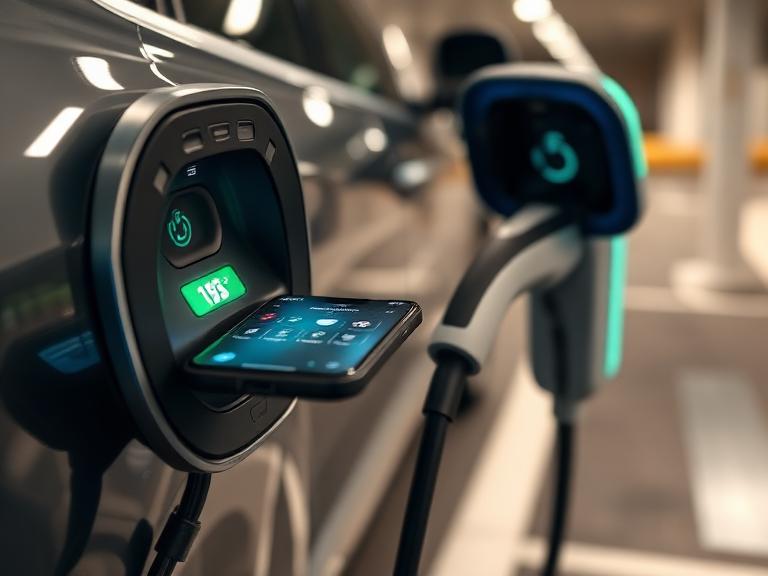
Commercial, Workplace, & Multi-Family EV Charging Installations
Installing EV charging points across commercial sites, apartments, workplaces, and parking structures involves additional layers of architecture.
+-----------------------------------------------------------------------------------+
|                        COMMERCIAL SITE MULTI-DROP ARCHITECTURE                    |
+-----------------------------------------------------------------------------------+
|                                                                                   |
|                   +------------------------------------------+                    |
|                   | Commercial Step-Down Transformer (480V)  |                    |
|                   +------------------------------------------+                    |
|                                        |                                          |
|                                        v                                          |
|                   +------------------------------------------+                    |
|                   | Commercial Subpanel (120/208V 3-Phase)   |                    |
|                   +------------------------------------------+                    |
|                                        |                                          |
|        +-------------------------------+-------------------------------+          |
|        |                               |                               |          |
|        v                               v                               v          |
|  +-----------+                   +-----------+                   +-----------+    |
|  | Charger 1 | <--- OCPP --->    | Charger 2 | <--- OCPP --->    | Charger 3 |    |
|  |  Dual-Gun |   Cellular/LAN    |  Dual-Gun |   Cellular/LAN    |  Dual-Gun |    |
|  +-----------+                   +-----------+                   +-----------+    |
|                                                                                   |
+-----------------------------------------------------------------------------------+
1. Multi-Family (HOA & Multi-Dwelling Units)
In apartments and multi-family communities, individual metering and shared infrastructure require specialized solutions:
- Deeded Parking Panel Feeds: Sub-metering cables routed directly from an individual tenant’s residential meter panel.
- Common Area Infrastructure with Software Billing: Chargers connected to a central common-area utility subpanel. Software handles driver authentication, access authorization, and payment processing.
2. Workplace & Public Retail Installations
Workplaces and commercial properties leverage charging infrastructure to attract talent, increase retail dwell times, and build brand equity:
- Dynamic Load Balancing (DLB): Grouping multiple chargers on a shared supply feeder. Software dynamically manages power outputs based on real-time vehicle connections, keeping peak demand below utility thresholds.
- Open Charge Point Protocol (OCPP): A non-proprietary communication protocol linking charging hardware with central management platforms. OCPP compliance gives property owners complete control over pricing, monetization, user authentication, and utility demand response integrations.
Regulatory Compliance, Codes, and Safety Standards
Safe EV charging deployments rely on strict adherence to international electrical standards and safety certifications.
                             REGULATORY SAFETY STACK
+-----------------------------------------------------------------------------------+
|  Safety / Testing Labels    | UL 2594 (EVSE), UL 2231 (Personal Protection)       |
+-----------------------------------------------------------------------------------+
|  Electrical Installation    | National Electrical Code (NEC) Article 625           |
+-----------------------------------------------------------------------------------+
|  Enclosure Rating           | NEMA 3R / NEMA 4X (Outdoor Weather Resistance)     |
+-----------------------------------------------------------------------------------+
|  Communication Protocols    | OCPP 1.6J / 2.0.1, ISO 15118 (Plug & Charge)       |
+-----------------------------------------------------------------------------------+
Essential NEC Article 625 Rules
NEC Article 625 governs all electric vehicle charging system installations:
- Overcurrent Protection: Circuits must be sized for continuous duty at 125% of maximum rated load.
- Disconnecting Means: For Level 2 equipment rated over 60A or 150V to ground, a lockable disconnect switch must be located within direct line of sight of the charger.
- Cable Management: Charging cables over 25 feet in length require certified cable retraction or management systems to mitigate tripping hazards and cable degradation.
- Ventilation Rules: Indoors installations do not require mechanical ventilation unless non-sealed flooded lead-acid batteries are used. Modern lithium-ion EVs do not require room ventilation.
Financial Breakdown: Hardware, Installation, and Maintenance
                       TOTAL RESIDENTIAL PROJECT COST BREAKDOWN
+-----------------------------------------------------------------------------------+
| [EVSE Hardware: $400 - $800]                                                      |
| [Professional Labor & Permits: $350 - $1,100]                                     |
| [Materials (Conduit, Wire, Breaker): $150 - $400]                                 |
| Optional Panel Upgrade: $1,500 - $3,000                                           |
+-----------------------------------------------------------------------------------+
| TOTAL STANDARD COST: $900 - $2,300  (Without Panel Upgrade)                       |
+-----------------------------------------------------------------------------------+
Residential Installation Cost Breakdown
Below is an estimated breakdown of typical residential Level 2 installation costs:
| Cost Element | Basic Setup (Short Wire Run) | Moderate Setup (Up to 50ft Run) | Complex Setup (Panel Upgrade Included) |
| EVSE Hardware Unit | $400 – $600 | $500 – $800 | $700 – $1,200 |
| Electrical Permit & Inspection | $50 – $150 | $100 – $250 | $150 – $400 |
| Wire, Conduit, & Hardware | $100 – $200 | $250 – $450 | $400 – $800 |
| Professional Electrician Labor | $300 – $500 | $500 – $900 | $1,000 – $1,800 |
| Panel Upgrade (If Required) | $0 (None Needed) | $0 (None Needed) | $1,500 – $3,000 |
| Estimated Total Investment | $850 – $1,450 | $1,350 – $2,400 | $3,750 – $7,200 |
Commercial Installation Cost Breakdown
Commercial project investments vary depending on power requirements, site preparation, and civil engineering needs:
- Dual-Port Level 2 Commercial Charger: $3,500 – $7,500 per unit (hardware).
- Level 3 DC Fast Charger (50kW – 150kW): $28,000 – $75,000 (hardware).
- Commercial Site Work & Infrastructure: $10,000 – $60,000+ (includes trenching, concrete pads, transformer drop, directional boring, and asphalt repaving).
Operational Execution: Installing a Charging Point
To ensure a smooth installation, follow this step-by-step process:
1.Perform Site Assessment & Load Calculation:Day 1.
Inspect the main electrical panel capacity, calculate total home loads, measure distance from panel to parking location, and select the optimal mounting spot.
2.Secure Permits & Utility Approval:Days 2–5.
Submit electrical site plans to local municipal building departments to secure permits. If installing commercial or high-power Level 2 units, file load inquiries with your utility provider.
3.Run Conduit & Pull Wire:Installation Day (Hours 1–2).
Mount the dedicated circuit breaker in the panel. Route rigid conduit or metallic tubing along wall structures, and pull correct copper wire gauges (e.g., 6 AWG) to the mounting outlet.
4.Mount, Hardwire, and Ground the Unit:Installation Day (Hours 2–3).
Securely attach the EVSE backplate to wall studs or mounting pedestals. Wire L1, L2, and Ground lines directly into the terminal block, torquing terminal screws to manufacturer specifications.
5.Commission, Test, and Pass Municipal Inspection:Installation Day (Hour 4).
Energize the circuit, conduct voltage and earth continuity testing, verify protective GFCI operation, pair smart features to Wi-Fi/OCPP, and pass municipal inspection.
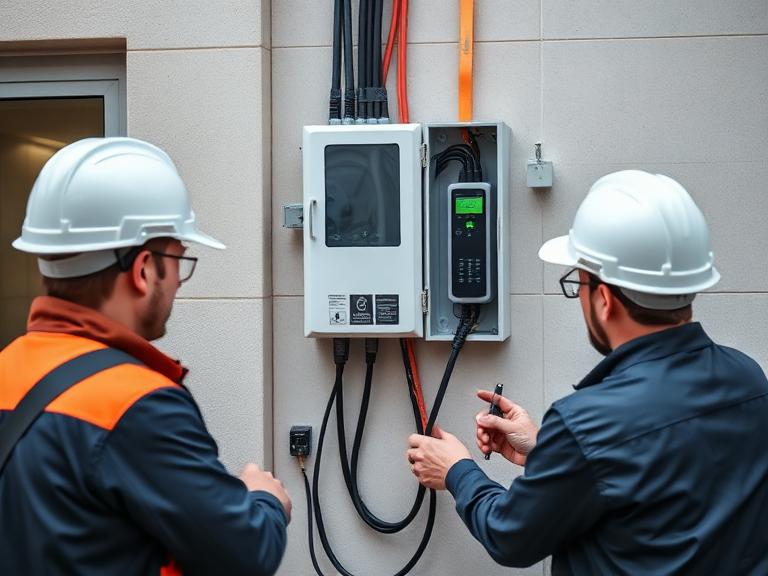
Frequently Asked Questions (FAQs)
1. How much does it cost to install a Level 2 EV charging point at home?
Standard residential Level 2 installations typically cost between $750 and $2,200 for hardware and professional labor. If your electrical service requires a panel upgrade from 100A to 200A, overall costs range between $2,500 and $4,500.
2. Can I install an EV charging point myself?
DIY installation is not recommended and is illegal in many jurisdictions. Level 2 chargers run on high-voltage 240V circuits requiring precise torque settings, proper wire sizing, continuous load calculations, and permit approvals. Improper installation carries risks of electrical fire, severe shock, and voided property insurance policies.
3. How long does a typical EV charging point installation take?
A standard residential Level 2 installation takes 2 to 4 hours once permits are approved. Commercial installations involving underground trenching, concrete pouring, or transformer upgrades can take several days to weeks depending on site complexity.
4. What is the difference between Level 1, Level 2, and Level 3 DC Fast Chargers?
- Level 1 (120V AC): Adds 3–5 miles of range per hour using standard outlets.
- Level 2 (240V AC): Adds 15–60 miles of range per hour; ideal for homes, multi-family housing, and workplaces.
- Level 3 DC Fast (480V DC): Bypasses onboard vehicle converters to deliver 50 kW to 350+ kW, charging vehicles up to 80% in 15–30 minutes.
5. Does my home electrical panel need an upgrade before installing an EV charger?
If your home has 200-amp service, it usually has enough headroom for a 40A or 50A EV circuit. Homes with older 100-amp panels may require a main panel upgrade or a smart Energy Management System (SEMS) that dynamically balances load consumption.
6. What electrical permits are required for EV charger installation?
Most jurisdictions require an electrical permit prior to running new high-voltage branch circuits. Once work is complete, a certified municipal inspector verifies code compliance with National Electrical Code (NEC) rules.
7. What cable wire size is required for a 50-amp EV charging point?
Under NEC continuous-load guidelines (80% rule), a 50-amp circuit requires 6 AWG copper wire (THHN/THWN in conduit). If running NM-B (Romex) wire, temperature limitations may require upgrading to 4 AWG wire for continuous 40A draws.
8. Should I choose a hardwired or plug-in (NEMA 14-50) installation?
Hardwired installations are preferred. They support higher charging speeds (48A to 80A), feature superior weather seals, offer higher reliability, and avoid costly GFCI circuit breaker requirements that can trigger false tripping on plug-in outlets.
9. Are there government tax credits or utility rebates for installing chargers?
Yes. Many regions offer substantial financial incentives. Federal tax incentives often cover up to 30% of total hardware and installation expenses (capped at $1,000 for residential and $100,000 for commercial), supplemented by local utility company rebates.
10. Can I connect my EV charging point to home solar panel systems?
Yes. Modern smart chargers can integrate directly with solar inverter monitoring systems. They auto-detect surplus solar generation during daylight hours and redirect excess solar energy straight into your electric vehicle.
11. How do commercial property owners monetize public EV charging points?
Commercial operators use networked OCPP chargers integrated with cloud software platforms. Property owners can monetize chargers through kilowatt-hour (kWh) billing, hourly connection fees, driver subscription plans, or occupancy-based idle charges.
12. What is OCPP and why is it essential for commercial chargers?
OCPP (Open Charge Point Protocol) is an open communication standard linking charger hardware to central control software. OCPP prevents hardware lock-in, allowing owners to easily switch software providers without replacing physical charging equipment.
13. What maintenance does an EV charging point require?
EV chargers require minimal maintenance. Periodic tasks include inspecting charging cables for wear, checking connector pins, verifying weatherproofing seals, cleaning air filters on DC fast chargers, and keeping unit firmware updated.
14. How do extreme weather conditions affect outdoor charging points?
Commercial and residential EV chargers rated NEMA 3R or NEMA 4 (IP65/IP66) are built to handle heavy rain, ice, snow, and severe heat. In cold temperatures, smart chargers automatically adjust thermal profiles to safely condition cold vehicle batteries.
15. Can multiple EV chargers share a single electrical circuit?
Yes, using Dynamic Load Management (DLM). Smart chargers communicate over local networks to dynamically balance total available amperage across active vehicles, maximizing charging points without triggering panel overloads.