

Table of Contents
Best Catering Menu for Indian Weddings | Expert Guide
The best catering menu for Indian weddings includes a balanced mix of regional favorites, vegetarian and non-vegetarian options, live counters, and desserts—typically 15–25 well-curated dishes that prioritize taste, service efficiency, and guest comfort over sheer variety.
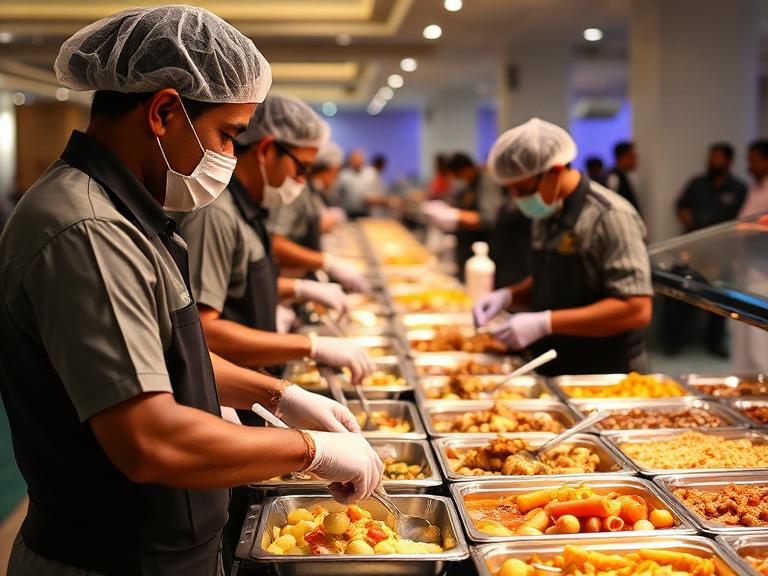
What Is the Best Catering Menu for Indian Weddings?
The best catering menu for Indian weddings is not defined by the number of dishes—it’s defined by balance, familiarity, and execution.
In India, weddings are multi-generational gatherings. Your menu must appeal to:
- Elders who prefer traditional food
- Middle-aged guests who value comfort and taste
- Younger guests who enjoy variety and live experiences
A well-designed menu blends:
- Regional specialties
- Classic wedding staples
- Interactive food counters
- Simple, satisfying desserts
The focus should always be on consistency and flow, not excess.
Why Menu Planning Matters More Than You Think
From years of catering experience, one thing is clear:
A poorly planned menu can disrupt even the most well-organized wedding.
1. Food Drives Guest Satisfaction
Guests may forget décor, but they always remember food quality.
2. Menu Impacts Event Flow
Too many items = confusion and long queues
Too few items = dissatisfaction
3. Cultural Expectations Are Strong
Indian weddings carry food traditions—ignoring them can disappoint families.
4. Budget Efficiency
A smart menu reduces waste while maintaining quality.
How Catering Menu Planning Works
A structured approach ensures your menu works in real conditions—not just on paper.
Step 1: Understand the Event Type
Each function needs a different menu:
- Engagement: Light snacks + desserts
- Haldi/Mehendi: Comfort and regional food
- Wedding Ceremony: Traditional meals
- Reception: Expanded multi-cuisine menu
Step 2: Fix Guest Count
Menu quantity depends heavily on accurate estimation.
Step 3: Choose Cuisine Mix
Typical Indian wedding menu includes:
- North Indian
- South Indian
- Regional specialties
- Street food-inspired counters
Step 4: Decide Service Style
- Buffet (most practical)
- Traditional leaf service (South Indian weddings)
- Plated service (premium weddings)
Step 5: Test Before Finalizing
A tasting session helps avoid unpleasant surprises.
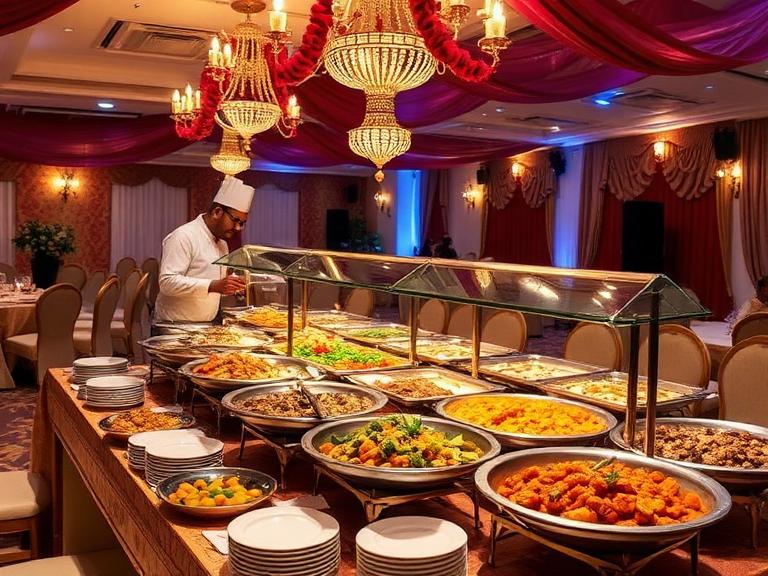
Core Components of the Best Indian Wedding Menu
A strong catering menu includes these essential sections:
1. Welcome Drinks
Keep it refreshing and simple:
- Fresh lime soda
- Jaljeera
- Buttermilk
- Fruit punch
Avoid overly heavy drinks—they reduce appetite.
2. Starters (Veg & Non-Veg)
Starters set the tone for the meal.
Vegetarian:
- Paneer tikka
- Veg cutlets
- Hara bhara kebab
Non-Vegetarian:
- Chicken tikka
- Fish fry
- Mutton seekh kebab
Limit to 4–6 items to maintain quality.
3. Main Course (The Core Experience)
This is where most guests focus.
North Indian Section:
- Butter naan / roti
- Paneer butter masala
- Dal makhani
South Indian Section:
- Sambar
- Rasam
- Poriyal
Rice Section:
- Veg pulao
- Jeera rice
- Biryani (essential in most weddings)
Non-Veg Main Course:
- Chicken curry
- Mutton curry
4. Live Counters (High Engagement)
Live stations create excitement and reduce buffet crowding.
Popular options:
- Chaat counter
- Dosa counter
- Pasta counter
- Indo-Chinese station
Keep 2–3 live counters maximum.
5. Accompaniments
Often overlooked, but essential:
- Pickles
- Papad
- Raita
- Salad
6. Desserts (End on a High Note)
Best mix:
- 1 traditional sweet
- 1 hot dessert
- 1 cold dessert
Examples:
- Gulab jamun
- Rasmalai
- Ice cream
- Halwa
Practical Full Wedding Menu Example (Balanced for 400 Guests)
Here’s a realistic, field-tested menu:
Welcome Drinks
- Buttermilk
- Fruit punch
Starters
- Paneer tikka
- Veg spring rolls
- Chicken kebab
Main Course
- Butter naan
- Paneer butter masala
- Mixed veg curry
- Dal tadka
- Chicken curry
Rice
- Veg pulao
- Chicken biryani
Live Counters
- Chaat
- Dosa
Desserts
- Gulab jamun
- Ice cream
Total items: ~20 (ideal range)
Menu Design Factors That Actually Matter
1. Guest Demographics
Different age groups = different preferences.
2. Time of Event
- Lunch → lighter menu
- Dinner → richer menu
3. Climate & Season
Hot weather → lighter food
Winter → richer gravies & sweets
4. Venue Type
Outdoor events require simpler logistics.
5. Budget Allocation
Focus on fewer high-quality dishes rather than many average ones.
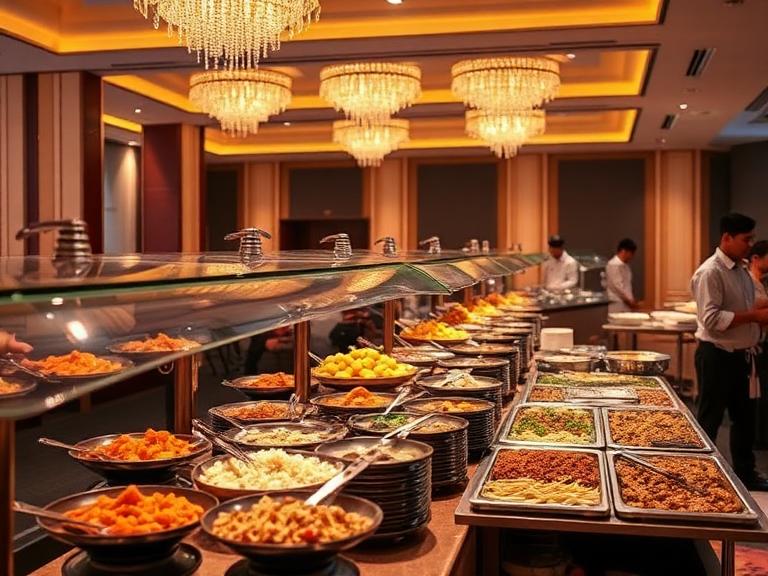
Guest Experience Factors (What Guests Really Notice)
1. Food Taste Consistency
Each batch must taste the same.
2. Serving Speed
Slow service leads to frustration.
3. Food Temperature
Hot dishes must stay hot.
4. Cleanliness
Hygiene is non-negotiable.
5. Queue Management
Live counters should not create bottlenecks.
Common Mistakes in Indian Wedding Menus
1. Overloading the Menu
More than 30 items reduces quality.
2. Ignoring Regional Preferences
Guests expect familiar flavors.
3. Poor Balance
Too many starters, weak main course.
4. Skipping Live Counters
Missed opportunity for engagement.
5. Not Planning for Peak Time
Food shortage during rush hours.
Expert Catering Tips from Real Events
1. Keep Menu Between 18–25 Items
This ensures control and consistency.
2. Always Include a Signature Dish
Example: biryani, regional curry.
3. Use Live Counters Strategically
They reduce buffet pressure.
4. Prioritize Taste Over Variety
Guests prefer fewer, better dishes.
5. Plan for 10% Buffer
Avoid shortages.
6. Keep Desserts Simple
Too many sweets often go to waste.
FAQs (Snippet-Optimized)
1. What is the ideal number of dishes in an Indian wedding menu?
18–25 dishes is considered ideal for quality and variety balance.
2. Is non-veg necessary in wedding menus?
It depends on cultural preferences, but vegetarian options are always essential.
3. What are must-have dishes in Indian weddings?
Biryani, paneer dish, dal, bread, dessert, and one live counter.
4. How to avoid food wastage?
Accurate guest count and controlled portions help reduce waste.
5. Are live counters necessary?
Not mandatory, but they significantly improve guest experience.
6. What is the best dessert combination?
One hot dessert + one cold dessert works best.
7. Should menus be different for each function?
Yes, variety across events improves guest experience.
8. How early should menu be finalized?
At least 2–3 weeks before the wedding.
9. What is the most popular Indian wedding dish?
Biryani is widely popular across regions.
10. Can menus be customized?
Yes, most caterers offer full customization.
Helpful Conclusion
The best catering menu for Indian weddings is not about showcasing maximum variety—it’s about delivering a well-balanced, smoothly executed dining experience.
When planning your menu:
- Focus on guest comfort
- Maintain quality consistency
- Avoid unnecessary complexity
A thoughtfully designed menu ensures your wedding is remembered for the right reasons—good food, smooth service, and satisfied guests.