

Table of Contents
Top EV Charging Station Service Provider Hyderabad | Turnkey EV Infrastructure
Hyderabad’s accelerated shift toward electric mobility—driven by the Telangana Electric Vehicle & Energy Storage Policy, rapid commercial development, and rising EV adoption—has turned charging infrastructure into a critical real estate and operational asset. From corporate IT hubs in HITEC City, Gachibowli, and Nanakramguda to suburban residential clusters in Kukatpally, Kompally, and LB Nagar, dependable charging networks are essential for smooth daily operations.
Operating a commercial charging network in Hyderabad’s unique environment involves complex technical considerations:
+-----------------------------------------------------------------------------------+
|               EV CHARGING INFRASTRUCTURE ECOSYSTEM IN HYDERABAD                    |
+-----------------------------------------------------------------------------------+
|                                                                                   |
|  [Grid Power Input] ---> [HT/LT Transformer Substation] ---> [Dedicated Feeder]  |
|                                                                     |             |
|  [Mobile App / Fleet CPO] <--- [OCPP Backend (4G/5G/Ethernet)] <----+             |
|                                                                     |             |
|  [Vehicle Charging] <--- [AC / DC Fast Chargers (Dual/Triple Guns)] <+             |
|                                                                                   |
+-----------------------------------------------------------------------------------+
Working with an end-to-end EV Charging Station Service Provider in Hyderabad ensures your infrastructure meets local DISCOM standards (TSSPDCL/TGSPDCL), functions reliably through high summer temperatures, and delivers maximum uptime and revenue return.
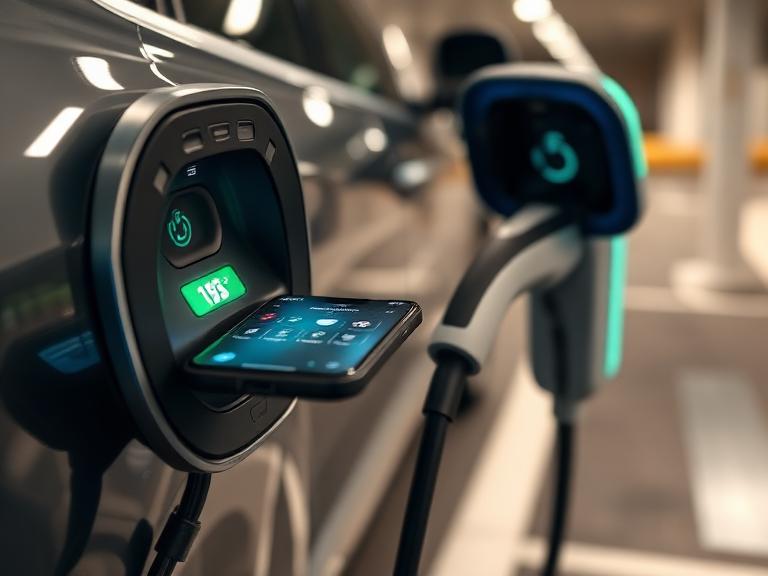
Strategic Architecture & Service Capabilities
Deploying commercial-grade charging assets requires integrated engineering across civil, electrical, software, and operational layers. A full-service provider manages every phase of the project lifecycle.
+-----------------------------------------------------------------------------------+
|                          TURNKEY DEPLOYMENT WORKFLOW                              |
+-----------------------------------------------------------------------------------+
|                                                                                   |
|  1. SITE FEASIBILITY & LOAD AUDIT  -->  Transformers, Earthing & Cabling          |
|  2. PERMITTING & DISCOM APPROVAL  -->  TGSPDCL Dedicated Tariff Category          |
|  3. HARDWARE DEPLOYMENT            -->  3.3kW AC to 360kW Ultra-Fast DC           |
|  4. CPO SOFTWARE INTEGRATION       -->  OCPP 1.6J/2.0.1, Billing & Fleet CMS       |
|  5. SLA-BACKED AMC SUPPORT         -->  24/7 Field Maintenance & Diagnostics      |
|                                                                                   |
+-----------------------------------------------------------------------------------+
Complete Spectrum of Services Offered
1. Site Engineering & Feasibility Audits
- Electrical Load Analysis: Assessing incoming high-tension (HT) and low-tension (LT) transformer capacities to support peak concurrent charging without tripping supply lines.
- Layout Design: Planning parking bays, cable management arms, wheel stops, bollards, and weather-proofing shelters tailored for local climate conditions.
- Safety & Regulatory Compliance: Designing earthing pits (<1 Ohm target resistance), surge protection devices (Type 1 & Type 2 SPDs), and isolation transformers that comply with Central Electricity Authority (CEA) safety guidelines.
2. DISCOM Liaisoning & Grid Sanctions
- TGSPDCL Dedicated EV Tariff Onboarding: Processing paperwork and approvals for dedicated single-part EV tariffs with the Southern Power Distribution Company of Telangana.
- Substation & Transformer Upgrades: Installing dedicated step-down transformers, Ring Main Units (RMUs), and LT distribution panels for high-capacity DC fast-charging plazas.
3. Hardware Provisioning & Commissioning
- AC Slow & Fast Chargers (3.3kW to 22kW): Ideal for residential gated communities, hotel parking spaces, and corporate office parks.
- DC Fast & Ultra-Fast Chargers (30kW to 360kW): Designed for highway hubs, public charging plazas, and commercial logistics fleets demanding rapid turnaround times.
- Liquid-Cooled Power Modules: Implementing advanced cooling systems engineered to handle continuous high-power delivery during intense Hyderabad summers.
4. Charge Point Operator (CPO) Management Software
- OCPP Protocol Integration: Cloud-hosted backends running on OCPP 1.6J and OCPP 2.0.1 to manage cross-brand charger networks seamlessly.
- Payment Gateways & Flexible Billing: Support for UPI, credit/debit cards, net banking, RFID cards, and automated fleet billing.
- Dynamic Load Management (DLM): AI-driven power distribution that automatically balances total power output across active chargers without exceeding sanctioned grid loads.
5. Annual Maintenance Contracts (AMC) & Field Operations
- Uptime SLAs: Field response times under 2 to 4 hours for commercial fast-charging hubs.
- Preventive Inspections: Bi-monthly or quarterly checks covering contactor health, insulation resistance, cable integrity, filter cleaning, and terminal tightening.
- Firmware Updates: Remote Over-the-Air (OTA) patches to resolve bugs, update security protocols, and refine payment flows.
Sector-Specific Implementation Strategies
+-----------------------------------------------------------------------------------+
|                        SECTOR-SPECIFIC DEPLOYMENT ARCHITECTURE                    |
+-----------------------------------------------------------------------------------+
|                                                                                   |
|  COMMERCIAL REAL ESTATE  --> Dual-Gun 22kW AC + 60kW DC | App & RFID Billing      |
|  RESIDENTIAL SOCIETIES   --> Multi-Bay 7.4kW AC Wallbox | Tenant Sub-Metering    |
|  LOGISTICS & FLEETS      --> 120kW-240kW DC Ultra-Fast  | Automated Dispatch API  |
|  HIGHWAY / TRANSIT HUBS  --> Multi-Gun Modular DC Plazas| Battery Backup / Solar  |
|                                                                                   |
+-----------------------------------------------------------------------------------+
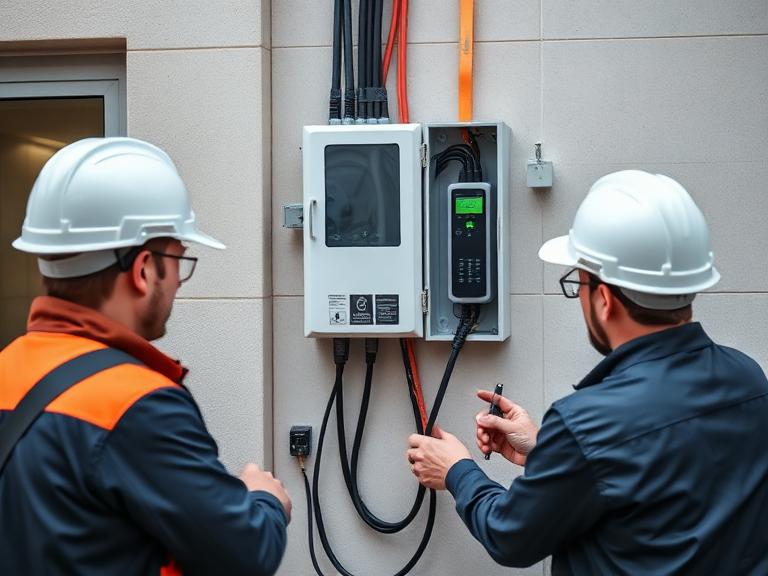
Commercial Comparison: EV Infrastructure Deployments
| Metric / Parameter | Residential Communities | Commercial IT Parks & Malls | Logistics & Commercial Fleets | Highway Fast-Charging Hubs |
| Typical Charger Types | 3.3kW – 11kW AC Type 2 | 22kW AC & 30kW–60kW DC | 60kW–180kW DC Fast Chargers | 120kW–360kW Dual/Triple Gun DC |
| Primary Goal | Resident convenience & sub-metering | Footfall, tenant amenity & monetization | Maximum fleet uptime & fast turnaround | High-throughput rapid charging |
| Average Dwell Time | 6 to 10 Hours (Overnight) | 2 to 4 Hours | 30 to 60 Minutes | 15 to 30 Minutes |
| Grid Load Demand | Low to Medium (10kW – 50kW) | Medium to High (50kW – 250kW) | High (150kW – 500kW+) | Very High (250kW – 1MW+) |
| Monetization Model | Pass-through cost / maintenance fee | Tariff markups + parking fees | Internal fleet cost allocation | Per-kWh tariff + convenience margin |
Key Service Areas Covered Across Greater Hyderabad
Deployments and field service engineer networks cover major zones across the Greater Hyderabad Municipal Corporation (GHMC) and HMDA limits:
- IT & Financial Hubs: HITEC City, Gachibowli, Nanakramguda, Madhapur, Kondapur, Raidurg, Knowledge City.
- North & Industrial Belts: Kukatpally, Miyapur, Bachupally, Medchal, Kompally, Jeedimetla, Sanathnagar, Balanagar.
- Central & Commercial Districts: Banjara Hills, Jubilee Hills, Somajiguda, Begumpet, Ameerpet, Punjagutta, Abids.
- East & Airport Corridors: Uppal, LB Nagar, Dilsukhnagar, Nagole, ECIL, Nacharam, Shamshabad (Airport Zone).
- Highways & Outer Ring Road (ORR): Hyderabad-Vijayawada (NH 65), Hyderabad-Bangalore (NH 44), Hyderabad-Warangal (NH 163), and ORR Exit Interchanges.
Frequently Asked Questions (FAQs)
1. What services does an EV charging station service provider offer in Hyderabad?
A full-service provider handles end-to-end execution: site surveys, electrical design, grid capacity sanctions from TGSPDCL, hardware supply, transformer installation, CPO software management, billing integration, and AMC maintenance.
2. How do I obtain approval from TGSPDCL for a commercial EV charging station?
Your service provider prepares load estimation reports, single-line diagrams (SLDs), and submits applications to TGSPDCL for a dedicated EV charging tariff line. They coordinate inspectorial approvals and meter commissioning on your behalf.
3. What is the difference between AC and DC charging stations?
AC chargers (3.3kW to 22kW) feed alternating current to the vehicle’s onboard converter, making them ideal for long dwell times like overnight residential or workplace parking. DC fast chargers (30kW to 360kW) feed direct current straight to the EV battery, bypassing the onboard converter to fully charge vehicles in 15 to 60 minutes.
4. How long does it take to install a commercial EV charging station in Hyderabad?
A standard AC installation in a residential or commercial building typically takes 3 to 7 business days. A high-power DC fast-charging plaza requiring dedicated step-down transformers, civil works, and DISCOM sanctions usually takes 3 to 6 weeks.
5. What are the space requirements for a public EV charging hub?
Each charging bay requires standard vehicle parking dimensions (approximately 2.5m x 5m). Additionally, an equipment footprint of 1.5 to 3 square meters is needed for the charger housing, isolation panels, and transformer units.
6. Can gated residential communities monetize EV chargers installed on their premises?
Yes. CPO software allows management committees to set customized tariffs for residents and guest visitors. The system automates collection via mobile app wallets or UPI and routes payments directly to the society account.
7. How does Dynamic Load Management (DLM) prevent electrical tripping?
DLM software monitors the total real-time electrical draw of a building or facility. When overall demand spikes, it automatically throttles the power allocated to active EV chargers, keeping total draw safely within sanctioned grid limits without blowing mains fuses.
8. What standard connector types are used in India?
- CCS2 (Combined Charging System 2): The standard for DC fast charging across most modern electric cars and commercial fleets.
- Type 2: The standard for AC charging across passenger cars and light commercial vehicles.
- GB/T or LEV DC: Used for lightweight electric 2-wheelers and 3-wheelers.
9. What maintenance is required to keep commercial chargers operating reliably?
Routine maintenance includes cleaning air filters, inspecting connector pins and cable jackets, verifying earth pit ground resistance (<1 Ohm), testing RCCB/SPD protection modules, and applying firmware upgrades.
10. Can solar power be integrated with commercial EV charging stations?
Yes. Hybrid charging setups can combine rooftop solar arrays or solar carports with battery energy storage systems (BESS). This approach reduces grid dependency during peak hours and lowers operational electricity expenses.
11. How does a turnkey EV charging solution differ from buying hardware directly?
Buying hardware leaves site preparation, civil works, DISCOM approvals, wiring, CPO backend setup, and ongoing repairs in your hands. Turnkey providers manage the entire lifecycle under unified SLAs and single-point accountability.
12. Are there government subsidies or policy incentives for installing EV chargers in Telangana?
The Telangana EV Policy offers streamlined single-window clearances, dedicated single-part electricity tariffs for EV infrastructure, and targeted capital subsidies or land-lease support for public charging sites.
13. How do commercial hosts track charger usage and revenue performance?
Host clients receive access to a web-based CPO dashboard displaying live charger availability, session histories, power consumption metrics, tariff settings, and automated monthly revenue payouts.
14. What protection systems prevent charger damage during heavy monsoons or summer heat waves?
Chargers feature IP54 or IP65 weather-proof enclosures, outdoor-rated UV shelters, automated thermal throttling, liquid cooling for ultra-fast units, and dedicated surge protection devices (SPDs) to guard against monsoon lightning and grid spikes.
15. How do I get started with an EV charging station project in Hyderabad?
Contact our project team to schedule an initial site inspection. We evaluate your location’s parking layout, existing electrical infrastructure, and transformer capacity to present a customized design and commercial proposal.