

Table of Contents
Evaluating Lift Service Centers in Hitech City, Hyderabad
The rapid vertical expansion of Hyderabad’s premier information technology corridors has turned vertical transportation from a building amenity into a mission-critical utility. Across the high-density tech landscape of Hitech City—stretching from the commercial office hubs of Madhapur and Mindspace to the premium high-rise residential complexes in Kondapur and Gachibowli—elevators form the operational spine of daily commerce and community life.
When a multi-car passenger group fails in a corporate office or an automatic sliding door system malfunctions in a high-rise residential complex, the consequences ripple quickly. They disrupt commercial operations, breach local accessibility mandates, and introduce significant legal liability under evolving state safety standards.
Selecting a specialized partner from among the lift service centers in hitech city requires a close look at electromechanical profiles, local statutory mandates, and advanced predictive diagnostic workflows.
1. High-Density Urban Topography and its Impact on Lift Assets
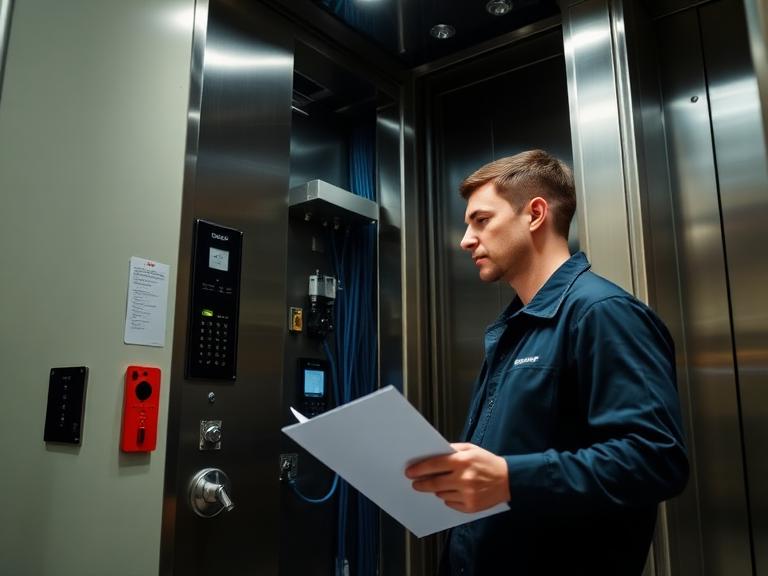
Hitech City features a distinct mix of building styles, each imposing unique physical demands on elevator engineering. The structural demands of an IT park with thousands of daily employee transits differ fundamentally from the low-speed, low-frequency patterns of a luxury residential villa in neighboring Kondapur.
Commercial IT Parks and Financial Hubs
In high-occupancy zones like Cyber City, Mindspace, and the Financial District boundary lines, elevator installations utilize high-speed gearless traction machines capable of velocities exceeding $2.5\text{ m/s}$. These configurations feature advanced group-control logic systems, destination dispatch interfaces, and heavy structural wear on the brake lining sub-assemblies.
The primary engineering challenges in these environments include high thermal stress in Machine-Room-Less (MRL) hoistway enclosures and managing high voltage variations during peak grid shifts.
Mid-Rise Commercial Plazas and Retail Complexes
Properties housing mixed retail showrooms, medical facilities, and decentralized corporate offices face highly erratic passenger loads. Lifts in these zones handle constant stop-and-start stress, which can accelerate wear on landing door mechanical interlocks, door operator belts, and safety edge light curtains.
High-End Gated Communities and Standalone Apartments
The expanding residential sectors in Kondapur, Miyapur, and the immediate Hitech extensions use a combination of traditional geared passenger lifts and modern MRL configurations.
Because these shafts sit close to active residential spaces, maintenance protocols place a high priority on reducing operational noise, ensuring accurate platform floor-leveling to protect elderly residents, and maintaining the battery banks for the Automatic Rescue Device (ARD).
2. Directory Framework: Technical Classification of Service Providers
The technical competency landscape for elevator care in Hitech City is split into three distinct provider categories. Each group offers different technical advantages, response times, and component sourcing networks.
A. Global Multi-National OEMs
- Key Entities: KONE Elevator India, Otis Worldwide, Schindler Lifts, TK Elevator.
- Technical Engineering Profile: These players specialize in proprietary closed-protocol microprocessor architectures, high-speed permanent magnet synchronous motors (PMSM), and cloud-managed predictive maintenance setups.
- Operational Fit: Best suited for high-rise commercial structures and international tech campuses that require strict, single-brand component consistency and have flexible capital budgets.
B. Tier-1 Authorized Domestic Engineering Centers
- Key Entities: Jackson Elevators, Oscan Elevators, Omega Elevators, local enterprise engineering firms.
- Technical Engineering Profile: These providers offer strong expertise across multiple brands, using open-protocol programmable logic controllers (PLCs) and universal Variable Voltage Variable Frequency (VVVF) inverters (such as Yaskawa, Monarch, or Danfoss).
- Operational Fit: Highly effective for multi-family residential societies, commercial complexes with mixed equipment brands, and property boards looking to avoid long-term vendor lock-in.
C. Local Emergency Maintenance and Rapid Repair Hubs
- Key Entities: Ksk Elevators, Shiva Sai Lift Services, decentralized specialized mechanical teams.
- Technical Engineering Profile: These teams focus on rapid field response, ad-hoc mechanical troubleshooting, cleaning landing door interlock tracks, and replacing worn suspension cables or ARD batteries.
- Operational Fit: Ideal for independent low-rise properties, standalone apartments, and properties facing immediate, out-of-warranty breakdown situations that require on-site help within an hour.
3. Comprehensive Service Architecture: What Top Centers Deliver
A professional elevator care center manages the entire lifecycle of vertical transport assets, providing four distinct service lines.
Core Engineering Services Matrix
A. Preventive Maintenance Programs (AMC)
Modern lift upkeep balances basic mechanical maintenance with advanced electronic diagnostics. Contracts are split into two standard categories:
- Non-Comprehensive AMC Framework: Provides scheduled monthly field safety audits, systematic rail lubrication, cleaning of landing door sills, and adjustments to structural brake clearances. All required spare parts, electronic boards, and major component swaps are billed separately.
- Comprehensive AMC Framework: Operates as a full-risk management contract. It covers all labor costs for preventative care, provides 24/7 emergency breakdown support, and includes the cost to replace worn components like main traction ropes, light curtains, VVVF capacitors, and ARD battery packs.
B. Specialized Emergency Repair and Break-Down Intervention
When a lift car experiences an unexpected failure, local service hubs deploy field technicians equipped with specialized diagnostic equipment to safely restore service:
- Safety Loop Continuity Tracing: Technicians use digital multimeters to trace the low-voltage safety circuit, checking switches along the pit stop, car gate, landing interlocks, and overspeed governor to pinpoint the exact failure point.
- Component-Level Inverter Calibration: If a drive fault occurs, technicians log directly into the VVVF inverter terminal to analyze fault histories (such as overcurrent spikes or DC bus overvoltage errors) and re-tune motor parameters.
- Suspension Tension Balancing: Technicians measure and adjust the tension across all steel hoisting ropes to ensure uniform load distribution, preventing premature wear on the traction sheave grooves.
C. Passenger Rescue Operations and Safety Protocols
If an elevator stops between floors with passengers inside, service technicians use strict safety procedures to manage the situation:
- Intercom Assessment: Technicians use the two-way cabin intercom to confirm passenger safety, provide updates, and prevent panic.
- Power Isolation: Technicians follow strict Lockout-Tagout (LOTO) protocols at the main 3-phase electrical panel before entering the machine room or shaft.
- Manual Brake Release: Certified engineers use specialized mechanical levers to carefully lift the traction motor brake plates, slowly moving the cabin to the nearest landing floor zone to let passengers exit safely.
D. System Modernization and Component Retrofitting
When an older elevator system reaches 10 to 15 years of service, its structural components often remain sound while its electrical logic becomes outdated. Local service centers can modernize these systems through targeted upgrades:
- Controller Upgrades: Replacing old relay-based control logic with advanced microprocessors improves handling capacity and minimizes intermittent system bugs.
- Drive Upgrades: Retrofitting older motors with modern gearless PMSM drives and advanced VVVF control loops can reduce building electricity use by up to 50%.
- Passenger Interface Upgrades: Installing modern car operating panels (COP), clear landing operating panels (LOP), and responsive infrared multi-beam door curtains brings older lifts up to modern luxury and safety standards.

4. Mechanical and Electronic Breakdown of Lift Systems
To understand why professional service centers are necessary, it helps to examine how an elevator’s mechanical and electronic systems interact during daily operations.
The Low-Voltage Safety Loop Sequence
An elevator cannot move unless its complete safety circuit is closed. This circuit connects several critical safety devices in a continuous series loop:
$$\text{Safety Chain Continuity} = S_{\text{Pit Stop}} \cdot S_{\text{Buffer Contact}} \cdot S_{\text{Overspeed Governor}} \cdot S_{\text{Terminal Limit}} \cdot S_{\text{Car Gate}} \cdot S_{\text{Landing Lock}}$$
If any switch in this chain opens by even a millimeter due to structural shift, mechanical wear, or dirt buildup, the central controller instantly cuts power to the drive motor and drops the mechanical brakes to keep passengers safe.
The Variable Voltage Variable Frequency (VVVF) System
The VVVF drive acts as the main power manager for the traction motor, controlling how the car accelerates, cruises, and slows down. By modulating both the voltage and frequency of the electrical current, the drive shapes the elevator’s velocity curve into a smooth S-shape, preventing sudden jerks or jarring stops.
Technicians monitor the drive’s internal DC bus capacitors and heat sink assemblies, as high ambient temperatures in machine rooms during Hyderabad summers can cause thermal degradation and lead to sudden system shutdowns.
Common Mechanical Failure Points
- Landing Door Lock Wear: Constant door cycling can misalign the mechanical locks. If the door lock cam cannot securely engage the electrical contact switch, the entire system stays disabled.
- Platform Leveling Drift: Over time, stretching in the traction ropes or sensor drift can cause the car to stop slightly unevenly with the building floor, creating a tripping hazard for passengers.
- ARD Battery Failure: If lead-acid or lithium batteries are left unmonitored, they can lose their charge. When a local power outage occurs, a degraded battery pack may fail to power the rescue system, leaving passengers stuck between floors.
5. Regulatory Compliance and the Changing Legal Landscape in Telangana
The legal framework for elevator installation and maintenance in Hyderabad is undergoing its most significant update in decades. Building owners, residential welfare associations (RWAs), and corporate facility managers face stricter oversight and higher operational accountability.
The Transition to the New Bureau of Indian Standards (BIS) Safety Code
For years, elevator safety across India followed older standards like IS 14665 (for electric traction lifts) and IS 15785 (for machine-room-less lifts). However, the Bureau of Indian Standards has introduced the IS 17900 safety code series. This new code brings Indian elevator regulations in line with international standards, introducing several mandatory safety enhancements:
- Unintended Car Movement Protection (UCMP): Lifts must include automated safety mechanisms that prevent the car from drifting away from the landing zone if the doors are open.
- Advanced Intelligent Door Protection: Door safety systems must use high-density infrared light curtains that can detect smaller obstructions without needing physical contact to reopen.
- Upgraded Fire Resistance: All structural shaft components, wiring harnesses, and landing door assemblies must meet updated fire-resistance ratings to prevent smoke and flame from spreading through the building hoistway.
The Evolving Telangana Lifts Act and High Court Mandates
In early 2026, the Telangana High Court directed the state government to accelerate the implementation of a comprehensive legal framework to regulate elevator operations. Prompted by rising incidents in unmonitored properties, the court emphasized that property owners hold direct responsibility for maintaining lift safety.
Mandatory Compliance Roadmap for Property Managers
- Secure a Valid Form-B Operating License: Every building must hold a valid Form-B license issued by the Chief Electrical Inspectorate (CEIG) before running any passenger lift.
- Maintain a Machine Room Inspection Log: Property managers must keep a detailed on-site log book documenting all routine maintenance, part replacements, and official safety tests for inspection by state authorities.
- Schedule Annual Independent Safety Audits: Buildings must complete a full structural safety review every twelve months, including load tests, brake drops, and emergency battery tests, to maintain their building insurance and legal coverage.
6. Procurement Framework: Selecting a Qualified Maintenance Partner
Choosing a maintenance provider based on price alone can lead to hidden risks, incomplete maintenance checks, and unexpected repair bills later on. Property managers can use this technical framework to evaluate service center proposals objectively.
Key Evaluation Checklist
- [ ] Verify Class-A Electrical Licensing: Confirm the service provider holds an active Class-A Electrical Contractor License issued by the Telangana state authority.
- [ ] Insist on Open-Protocol Systems: Ensure the vendor’s control panels use non-proprietary software and standard diagnostic tools so any qualified technician can service the equipment in the future.
- [ ] Check Local Parts Availability: Confirm the service center maintains a dedicated spare parts depot within the Hitech City zone to keep repair downtime to a minimum.
- [ ] Review Liability Insurance Coverage: Verify the provider carries sufficient public liability insurance to protect your property and passengers against accidents during service operations.
7. Frequently Asked Questions (FAQs)
Q1: What is the average cost of an elevator Annual Maintenance Contract (AMC) in Hitech City?
A: Annual contract costs vary based on building height, equipment speed, and contract type. For a standard residential low-rise elevator (G+4 floors, 6-passenger capacity), a basic non-comprehensive AMC typically ranges from ₹18,000 to ₹35,000 per year. A full comprehensive contract that covers all major mechanical and electronic replacement parts generally ranges from ₹42,000 to ₹75,000 per year. High-speed commercial systems in corporate IT parks require custom engineering quotes based on specific usage patterns.
Q2: How does the new BIS IS 17900 code affect existing older elevator installations?
A: The new IS 17900 code applies directly to new installations and major modernization overhauls. However, if an older lift suffers from frequent door sensor errors, leveling inaccuracies, or control drops, local safety inspectors strongly recommend updating the system to match the new standards—such as adding unintended car movement protection and multi-beam infrared light curtains—to minimize operational liabilities.
Q3: What causes an elevator to experience bumpy rides or loud scraping noises?
A: These symptoms usually point to mechanical wear in the shaft assembly. Bumpy rides or scraping sounds often occur when structural guide shoes wear out, when the guide rails lose proper lubrication, or when the traction steel wire ropes stretch unevenly. If you notice these issues, have a technician inspect the car’s alignment and guide rail tracks promptly.
Q4: Why do automatic elevator doors cycle open and closed repeatedly without moving?
A: This issue is typically caused by a block in the door safety loop. The most common causes are dust or direct sunlight blinding the infrared light curtain sensors, debris stuck inside the bottom door track sill, or a failing door operator switch. Cleaning the tracks and wiping down the sensor lenses often resolves the problem.
Q5: Who is held legally responsible if an elevator accident occurs in a building?
A: Under current national safety codes and evolving state liability guidelines, the primary legal responsibility rests with the building owner, corporate board, or residential welfare association. If an accident occurs due to an expired operating license, missed maintenance cycles, or using unlicensed technicians, the building management faces significant legal exposure and potential insurance denials.